
"east wind"
1000 article(s) found

How does Malaba form the flavor of Indian coffee?
Coffee was brought into the establishment of the first coffee farm by pilgrims as early as the 16th century, and you might not have imagined that India produces much more coffee than Ethiopia and any Central American country, with 900000 hectares of land growing coffee beans. There are about 140000 coffee farms in India, and more than 90% of the farms are small-scale farming with an area of less than 10 mu, which are located in the south and east.

Introduction to the flavor and taste of Dominican boutique coffee beans and the characteristics of the manor producing area
The earliest coffee in Dominica was introduced from Martinique (the overseas province of France), dating back to the early 18th century. Dominica is an island country with a tropical climate. The temperature changes little throughout the year. Except for the lower temperature in the Central Cordillera Mountains, which can reach less than 0 ℃ in winter, the annual average temperature in other areas is between 25 and 30 ℃, which is affected by the mountain topography.

Indian coffee brewing Indian style soiled coffee description of monsoon coffee brewing flavor
When it comes to coffee beans in Asia, people always think of Mantenin coffee in Indonesia or small-grain coffee in Yunnan, China. In fact, there is also a coffee bean with a mysterious veil, Indian-style coffee beans (also known as monsoon coffee or Malaba coffee Monsooned Coffee), whose flavor formation process makes Qianjie coffee very interested. It is said to be

Fresh and elegant Santo Domingo fine coffee beans grinding degree roasting degree processing method
Dominican coffee is graded in AA, AB, etc. size, but coffee rules such as Siwao and Barahona are also classified as top quality. Both coffees are harvested in February to May and are washed. Such flavor characteristics are not only related to varieties and planting soil quality, but also closely related to the picking and processing methods of raw beans.

A brief introduction to the planting situation, geographical location, climate and altitude of Taiwan's high-quality coffee with mellow flavor.
In 1941 (the 16th year of Rizhaohe), most of the raw beans were shipped back to Japan. The planting area of coffee in Taiwan has reached 75 hectares, and it was called the largest coffee factory in the far East in its heyday. In 1945 (Rizhaohe 20 years), the area of coffee cultivation in Taiwan expanded to 113 hectares after the war. After the surrender of Japan, Taiwan was restored, and the national government strongly advocated the reclamation of fertile land and the cultivation of cash crops.

Arabica, Robusta and Liberian coffee are three different types of coffee.
Arabica beans grow in the cold high altitude areas of the tropics. They are an important type of commercial coffee. They bear fruit within three years and have a good aroma and acidity. Arabica coffee beans are mainly produced in South America (except parts of Argentina and Brazil), Central America, Africa (Kenya, Ethiopia and other places, mainly East African countries), Asia (Yemen, India,

Santo Domingo coffee beans, coffee beans
To trace the origins of Tibica, we must first talk about the coffee tree originally planted in Martinique. These trees were planted by Dominicans as far back as the early 18th century, so Dominica began growing coffee as early as that time. For a time, the Caribbean was almost synonymous with coffee production, but in recent years Cuba, Haiti and other producing areas have been severely damaged by Hurricane George and have since changed.

Dominican coffee with a lingering aftertaste and smooth taste introduces fine coffee.
The earliest coffee in Dominica was introduced from Martinique (the overseas province of France), dating back to the early 18th century. Dominica is an island country with a tropical climate. The temperature changes little throughout the year. Except for the lower temperature in the Central Cordillera Mountains, which can reach less than 0 ℃ in winter, the annual average temperature in other areas is between 25 and 30 ℃, which is affected by the mountain topography.

St. Helena Coffee single Bean Flavor description Variety planting Development History production area treatment taste introduction
St. Helena coffee can be traced back to 1733, brought into the seed cultivation by the British East India Company, exiled from the island after Napoleon's defeat, and praised St. Helena coffee, even on his deathbed, wanted to taste it again, contributing to the reputation of St. Helena coffee. Wind taste: the color is amber, the flavor is between wild and moderate and bright, with the rich fruity shadow of mocha beans.

Tanzania Coffee-are the coffee beans in the Shiviwaka producing area of Shvivaka bitter? What's the wind?
Professional coffee knowledge exchange more coffee bean information please follow the coffee workshop (Wechat official account cafe_style) Tanzania Coffee-Shvivaka Shiviwaka production area coffee beans are bitter? What flavor and taste do you have? How to cook it? Tanzania is famous for its peaberry coffee, but Tanzania Shiviwaka Co-Op 's AA is our best this year.

Yunnan Tieka Coffee Bean Flavor description treatment method Taste Grinding scale Fine Coffee introduction
Yunnan Tieka Coffee Bean Flavor description treatment method taste grinding scale boutique coffee 1. Timor: a hybrid of Arabica, Baba and Robasta found in East Timor. two。 Catimor: currently the main variety of commercial beans, East Timor was colonized by Portugal for 400 years. In 1959, the Portuguese transplanted the Brazilian bourbon variety Kaddura to East Timor and

Introduction to the origin of the flavor and taste of Dominican coffee with a lingering aftertaste
The earliest coffee in Dominica was introduced from Martinique (the overseas province of France), dating back to the early 18th century. Dominica is an island country with a tropical climate. The temperature changes little throughout the year. Except for the lower temperature in the Central Cordillera Mountains, which can reach less than 0 ℃ in winter, the annual average temperature in other areas is between 25 and 30 ℃, which is affected by the mountain topography.

Varieties of coffee trees in coffee producing areas of St. Helena
Coffee is always inextricably related to history, wind and wind, and great men. St. Helena is famous for Napoleon. St. Helena coffee is very desirable because of Napoleon. Unfortunately, this kind of coffee always makes people feel mysterious. What kind of taste is Napoleon so praised? Not everyone has a chance to taste it. Coffee that has tasted a lot of gourmet coffee
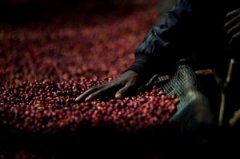
Boutique Indian coffee wind-stained Malaba coffee beans
Indian coffee style stained Malaba coffee beans our mysterious impression of India is not only its coffee, but also tea, temples, yoga, sitaqin, or even the more negative abnormal big cities, and so on. The reason why there are so many kinds of Indian beans on the market today must be attributed to the indomitable Indian coffee expert and importer Dr. Joseph Johns. Past 10

Introduction to the characteristics of boutique coffee in Dominica Santo Domingo coffee production area
In December 1492, Christopher Columbus arrived on Hispaniola on his first voyage. On his second voyage there in 1493, Santo Domingo became the capital of the island. [3] thousands of Tainos were demoted to slavery and engaged in gold mining. Due to a series of oppression, hunger and disease, by 1535, the Tino had only 60,000 left. 1501, Spain

Fresh and elegant Santo Domingo boutique coffee bean cultivation geographical location, climate, good altitude
Carefully selected in this way, the high-quality Dominican coffee exudes a faint aroma and gives people a faint fruity aroma with a lingering finish and a smooth and smooth finish. To trace the origin of Tibica, we should first talk about the coffee trees originally planted in Martinique. These trees were planted by Dominicans as far back as the early 18th century, so Dominica began at that time.
Indian coffee wind-stained Malaba coffee beans
Indian Coffee style stained Malaba Coffee beans Indian Coffee-enigmatic Coffee in a mysterious country our mysterious impression of India is not only in its coffee, but also in tea, temples, yoga, sitaqin, or even the more negative abnormal big cities. The reason why there are so many kinds of Indian beans on the market today must be attributed to the indomitable Indian coffee experts and imports.

Dominica Coffee Flavor description Grinding scale Manor production area introduction of boutique coffee beans
Turning to the introduction of Dominican coffee, the most distinctive features are fresh and elegant, full of particles, excellent acidity and pleasant flavor (two colleagues agree with this). Such flavor characteristics are not only related to the variety and the quality of the soil, but also closely related to the picking and handling of raw beans. Dominica's coffee is selected by the most expensive manual method, workers.

Characteristics of grindability of Dominica Santo Domingo Coffee with strong aroma introduction to taste treatment of varieties in producing areas
The earliest coffee in Dominica was introduced from Martinique (the overseas province of France), dating back to the early 18th century. Dominica is an island country with a tropical climate. The temperature changes little throughout the year. Except for the lower temperature in the Central Cordillera Mountains, which can reach less than 0 ℃ in winter, the annual average temperature in other areas is between 25 and 30 ℃, which is affected by the mountain topography.

Which three continents do coffee beans mainly grow in? introduction to the country of manor production
Which three continents do coffee beans grow mainly? variety characteristics Manor introduced that Mantenin produced in Sumatra is one of the few Arabica species with large particles, but poor production management and roasting are immediately reflected on coffee beans, so they will be criticized, but the rich and mellow taste from Toyo, such as syrup-like taste, made it before the Blue Mountains appeared.